Pressure Washing
Pressure Washing an Ottawa Driveway Before Listing: A Seller’s Preparation Guide
A practical plan for assessing, clearing and pressure washing an Ottawa driveway before listing photos or showings—without overpromising what cleaning can change.
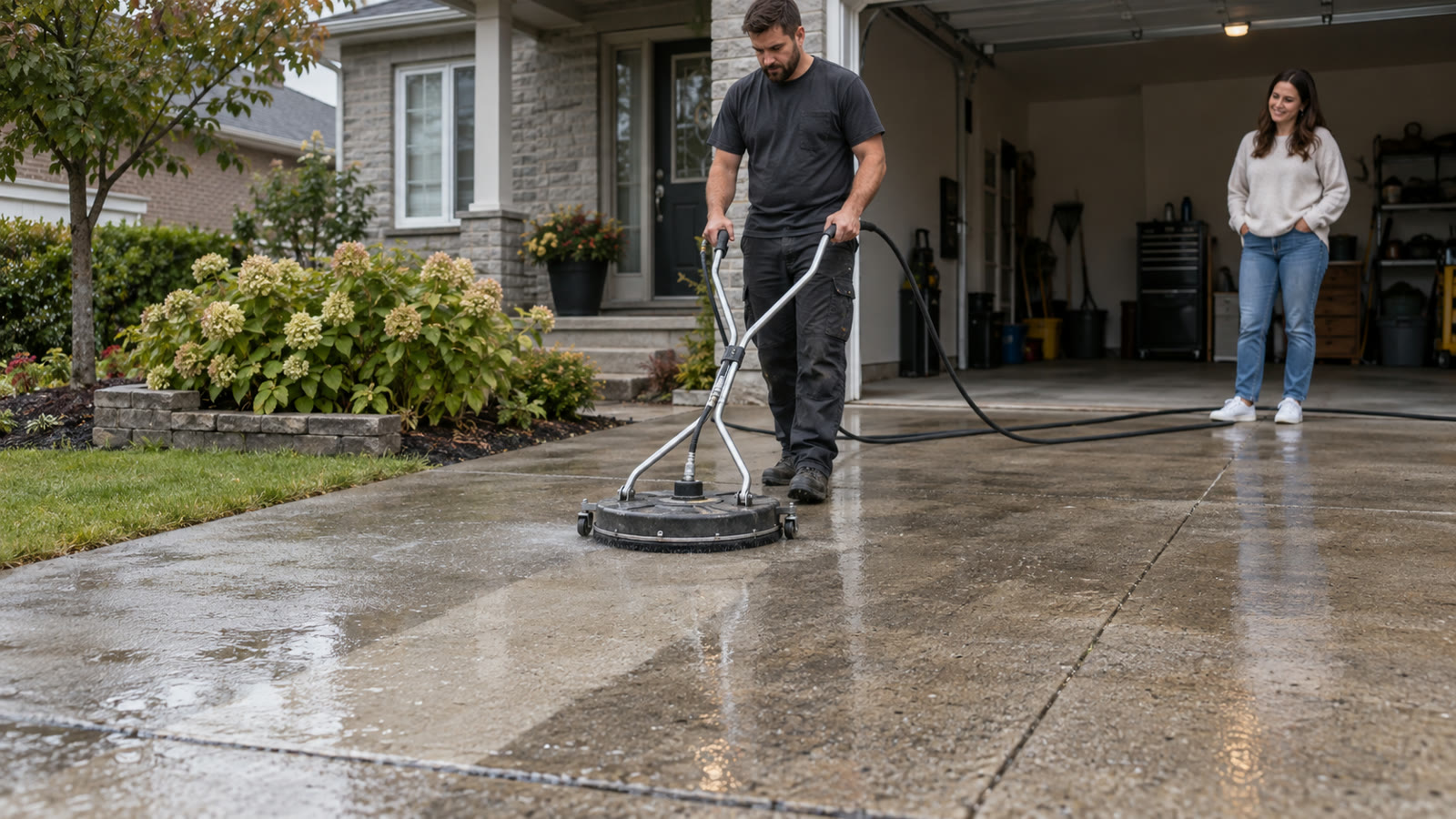
A driveway occupies a large part of many Ottawa listing photos, but it is easy to leave it until the last day. Vehicles, bins, planters and seasonal equipment can hide the surface during preparation. Once they are moved, tire marks, organic film, winter grit and ordinary weathering may become more visible than expected.
Pressure washing can improve how a suitable driveway presents, but it is not a repair or a guarantee that every mark will disappear. The useful goal is a more consistent, cared-for surface with clean edges and a clear route to the entrance. This guide helps Ottawa sellers and real-estate agents plan the work before photography, showings or an open house.
Start by identifying the driveway material
Concrete, interlock, asphalt, exposed aggregate and coated surfaces require different decisions. Some tolerate pressure cleaning better than others, and age, previous repairs, sealers and existing damage all matter. Do not choose a method based only on a wide photo or on what worked at another property.
- Identify whether the surface is concrete, interlock, asphalt, exposed aggregate or another material.
- Note previous sealers, coatings, repairs or patching if known.
- Photograph cracks, loose joints, flaking areas, settlement and damaged edges.
- Point out oil, rust, leaf tannin, paint and other distinct marks rather than describing the driveway as simply dirty.
- Confirm whether the garage threshold, walkway, steps or interlock border are included in the requested scope.
Choose the timing around listing photography
Schedule the wash early enough for the driveway to dry, for the surrounding area to be checked and for any separate repairs or landscaping work to be completed. Freshly wet concrete can photograph much darker than dry concrete, and water carried onto the garage floor or front walk can create extra clean-up. Avoid placing photography, moving trucks or contractor deliveries immediately after the wash.
If the property is occupied, decide where every vehicle will go during the appointment and drying period. The work area and equipment route must remain clear. Real-estate signs, portable basketball nets, planters, hoses and bins should be moved only by the person authorized to handle them, then returned after the surface is dry if they are meant to stay.
Inspect cracks, edges and drainage before equipment starts
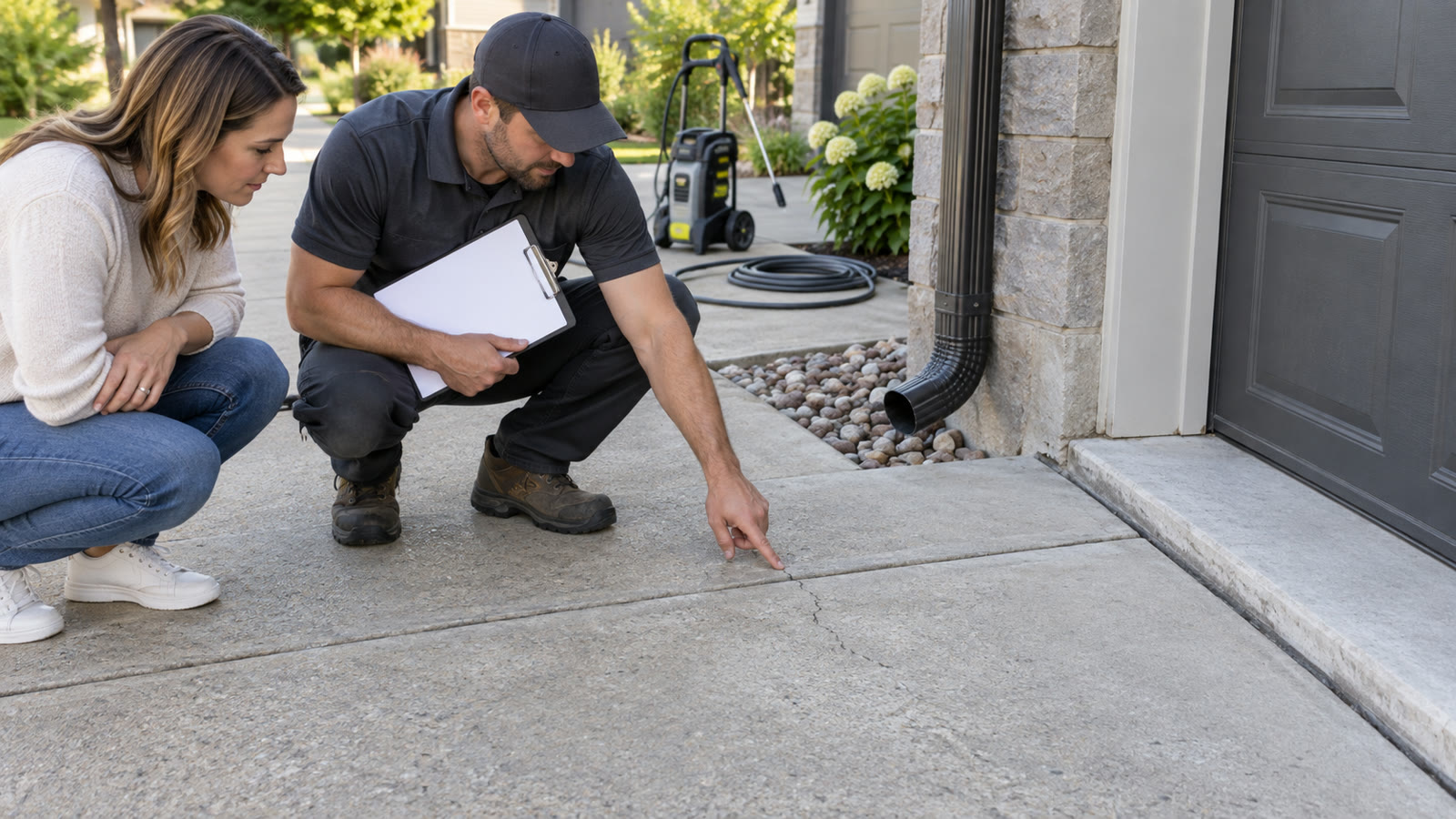
Walk the driveway from the street toward the garage. Look at control joints, cracks, the garage threshold, retaining edges and transitions to walkways or interlock. Check where the driveway naturally drains and where downspouts discharge. Water should not be directed into the garage, toward an open doorway or onto a neighbouring property.
Photograph existing damage before the area becomes wet. If concrete is loose, severely spalled or lifting at an edge, the cleaning method or scope may need to change. Painted, sealed or coated sections deserve particular caution because aggressive washing can produce an uneven finish or worsen existing failure.
Clear the driveway and protect what surrounds it
A clear surface makes the work more consistent and reduces trip hazards. Remove vehicles, loose toys, mats, small décor and ordinary debris. Sweep up stones or sharp objects that could be moved by water or equipment. Keep children and pets inside or in another secure area for the full appointment.
- Close garage doors, exterior windows and nearby doors.
- Confirm that door sweeps, weather stripping and low vents are intact.
- Move delicate planters and lightweight furniture away from the spray zone.
- Identify exterior outlets, lights, cameras and damaged fixtures near the work area.
- Keep the pressure-washer hose along an outer edge rather than across the main walking route.
- Tell the crew about shared driveways, narrow access, visitor parking rules and scheduled deliveries.
Landscaping and adjacent materials should remain part of the plan. Concrete borders may sit beside interlock, mulch, garden beds, wood, siding or masonry. Those transitions can require different pressure, distance or tools. A single aggressive pass across every material is not a suitable approach.
Set realistic expectations for stains and colour
Ordinary soil, surface film and loose residue often respond differently from oil, rust, paint, fertilizer marks or deep organic staining. The age and porosity of the surface affect the result. Some discolouration may remain after a responsible cleaning, and older repairs can become more noticeable once surrounding dirt is removed.
Discuss important marks before the appointment rather than after the driveway is finished. Cleaning should aim for a consistent result without damaging the surface in pursuit of one stubborn spot. Stain treatment, sealing, repairs and joint-sand replacement are separate services or decisions and should not be assumed to be included.
Use controlled methods around edges and the garage
Large open sections of suitable concrete may be cleaned with a surface cleaner to help maintain an even pattern. Edges, corners and transitions may require more controlled work. The spray should be kept away from door seals, open joints, damaged masonry and electrical fixtures. Water movement matters as much as pressure, especially near the garage and front entrance.
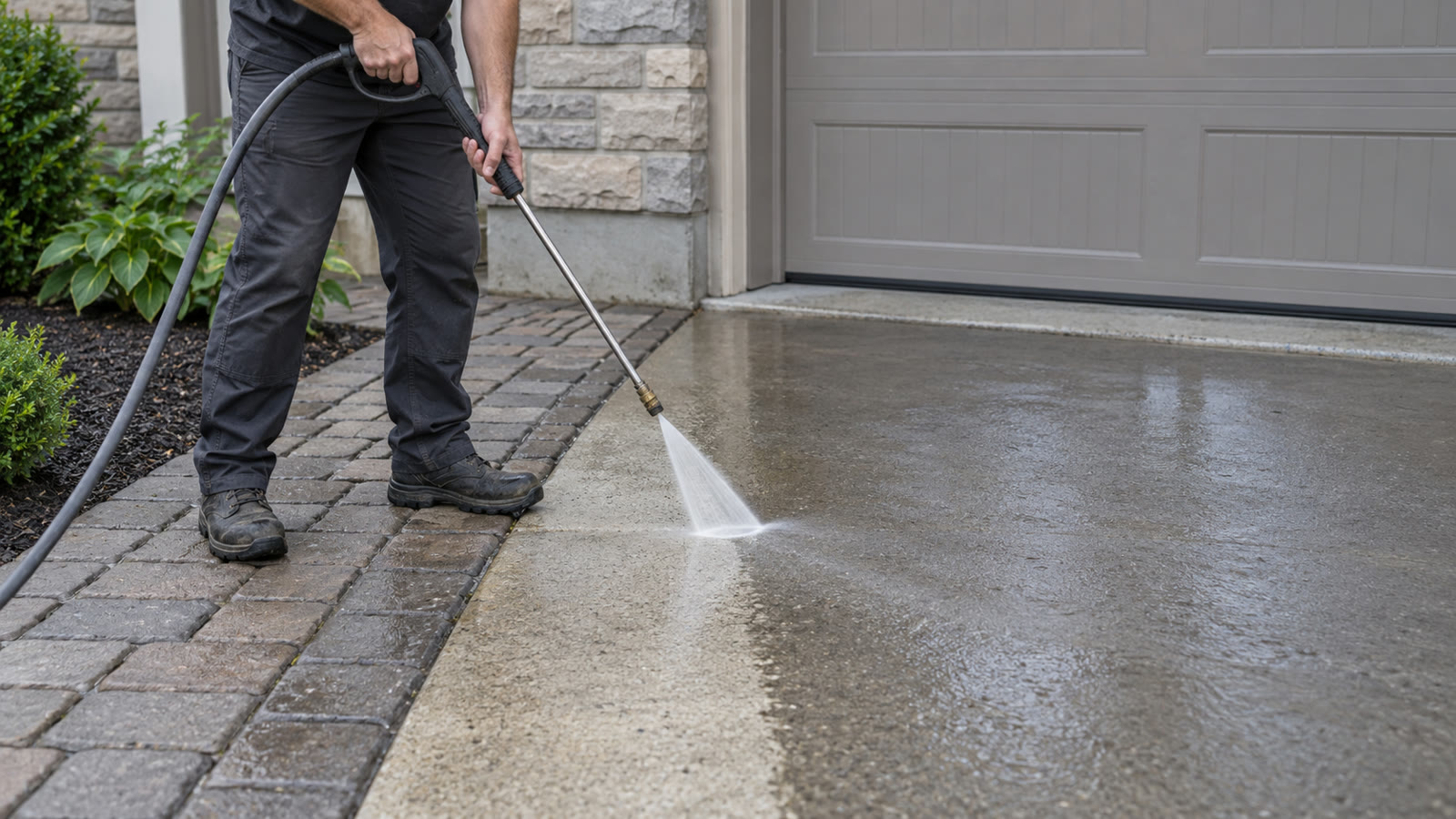
A narrow wand pass may look dramatically lighter while the surrounding surface is still wet. The final appearance should be judged after the driveway has dried consistently. Repeatedly concentrating pressure on one small mark can leave visible wand lines or surface damage; a cautious result is better than an artificially perfect claim.
Finish with a dry-property check
After cleaning, confirm that loose debris has been collected and that water is not pooling where it should not. Check the garage threshold, front walk, steps and street edge. Return approved items only when doing so will not trap moisture or mark the surface. Keep vehicles off the driveway for the period recommended for the completed work and any separate coating or repair.
- Photograph the dry driveway from the angles the listing photographer is likely to use.
- Check that hoses, tools and temporary barriers have been removed.
- Wipe or sweep tracked debris from the garage and entrance route if included.
- Confirm that gates, doors and exterior fixtures are left as instructed.
- Tell the photographer or agent if the surface is still damp or another contractor will use the driveway.
What to send Mattabo for a firm quote
Send one wide photo from the street, another from the garage and close views of stains, cracks, transitions and any damaged areas. Include the Ottawa address, the driveway material if known, approximate size, access details, available water connection and the listing or photography deadline. State whether the request includes only the driveway or also suitable walkways, steps or entrance areas.
Mattabo Property Care is fully insured for the services it provides; same-day service is often available but is not guaranteed until Mattabo confirms the appointment.
Photos are illustrative examples of typical residential service results.